Where Art Meets Health: Jennifer's Spring 2026 Recap
July 2, 2026 | Jennifer Kuo | Conference
Arts Datathon 2026 (Los Angeles, CA)
Wednesday, April 29, 2026
Each year, the Los Angeles County Department of Arts and Culture puts on a free and public Arts Datathon that brings together arts administrators, artists, researchers, educators, advocates, and others to learn about how data can be used to improve access to the arts. This year’s theme was about Knowledge. The opening plenary workshop, “How We Build Knowledge in Arts and Culture”, gave participants the opportunity to practice analyzing data and discussing how it can be presented in various ways which can result in multiple interpretations. For lunch, we enjoyed boxed meals while networking on the beautiful campus of Inner-City Arts, where the event occurred. There were six breakout sessions to choose from for the afternoon and I attended the one presented by Americans for the Arts (AFTA) called “No Numbers Without a Story: Case-Making When Trust is Fragile”. At the closing plenary, participants from each of the breakout sessions volunteered to report out what they learned. On behalf of our group, I shared the metaphor of building a “case-making sandwich” from the AFTA session. This was my second year attending and I encourage you all to check out next year’s datathon!
Learn more about Arts Datathon and access all the resource materials.
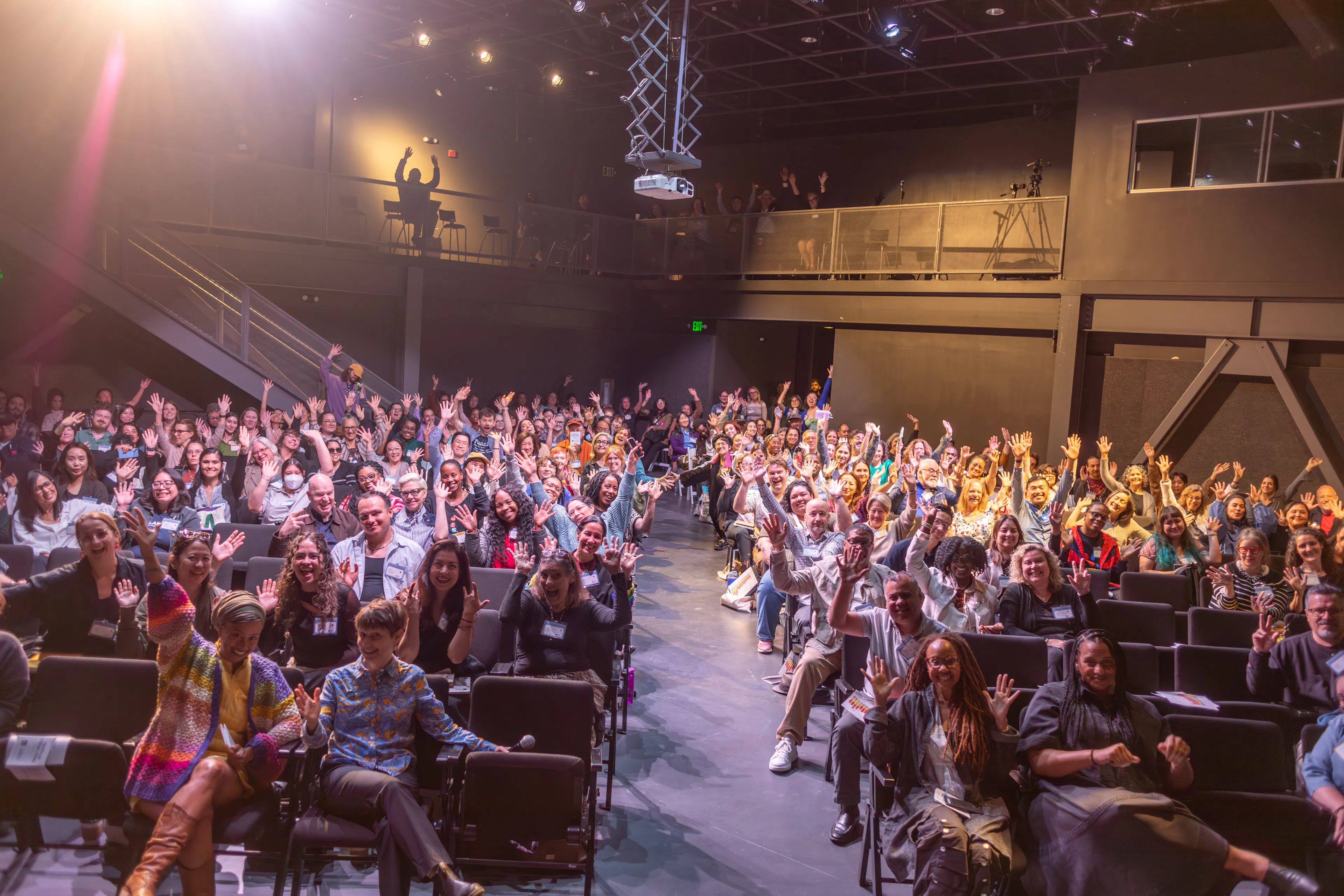
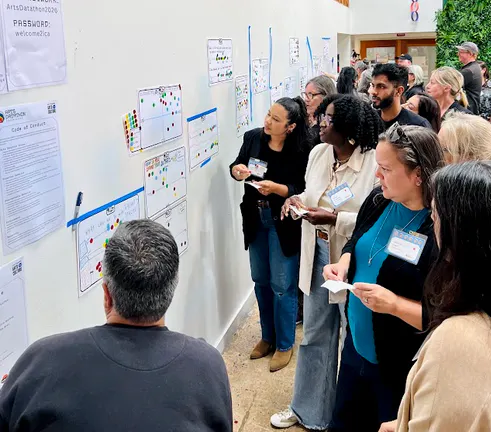
Left Photo: Participants at the 2026 Arts Datathon. Photo Credit: Malik Daniels; Right Photo: Session at 2026 Arts Datathon. Photo Credit: Katrina Pineda
The Science of Music and Learning: Health, Education, and Policy (Los Angeles, CA)
Thursday, June 11, 2026
The USC Center for Music, Brain, and Society held a one-day symposium at their Brain and Creativity Institute on campus. The program included sessions where speakers from various universities gave micro-presentations on findings of their research. After each set of the micro-presentations, the speakers transitioned into a panel discussion before opening it up for audience Q&A. After lunch, there was also a musical interlude for the audience to enjoy before the afternoon sessions about funding priorities and public communication. Dr. Veronica Alvarez, Executive Director of Create CA, presented on the “State of Arts Education in California” with Prop 28 updates.
I enjoyed attending this event for a second year in a row. My major takeaways are:
- Projects from clinical research to community interventions all play significant case-making to advance the field of arts and health.
- There are funding opportunities out there - think outside of the box. Did you know that Congress created the Foundation for the National Institutes of Health (FNIH) in 1990? The National Center for Complementary and Integrative Health (NCCIH) funds projects focused on well-being, health promotion, and whole person health. Presenter Cayley Tull said, “Fund art that does good, not just is good”.
- Presenters from both the National Institutes of Health and the National Endowment for the Arts expressed there is a growing trend on projects that focus on behavioral health.
Learn more about the USC Center for Music, Brain, and Society
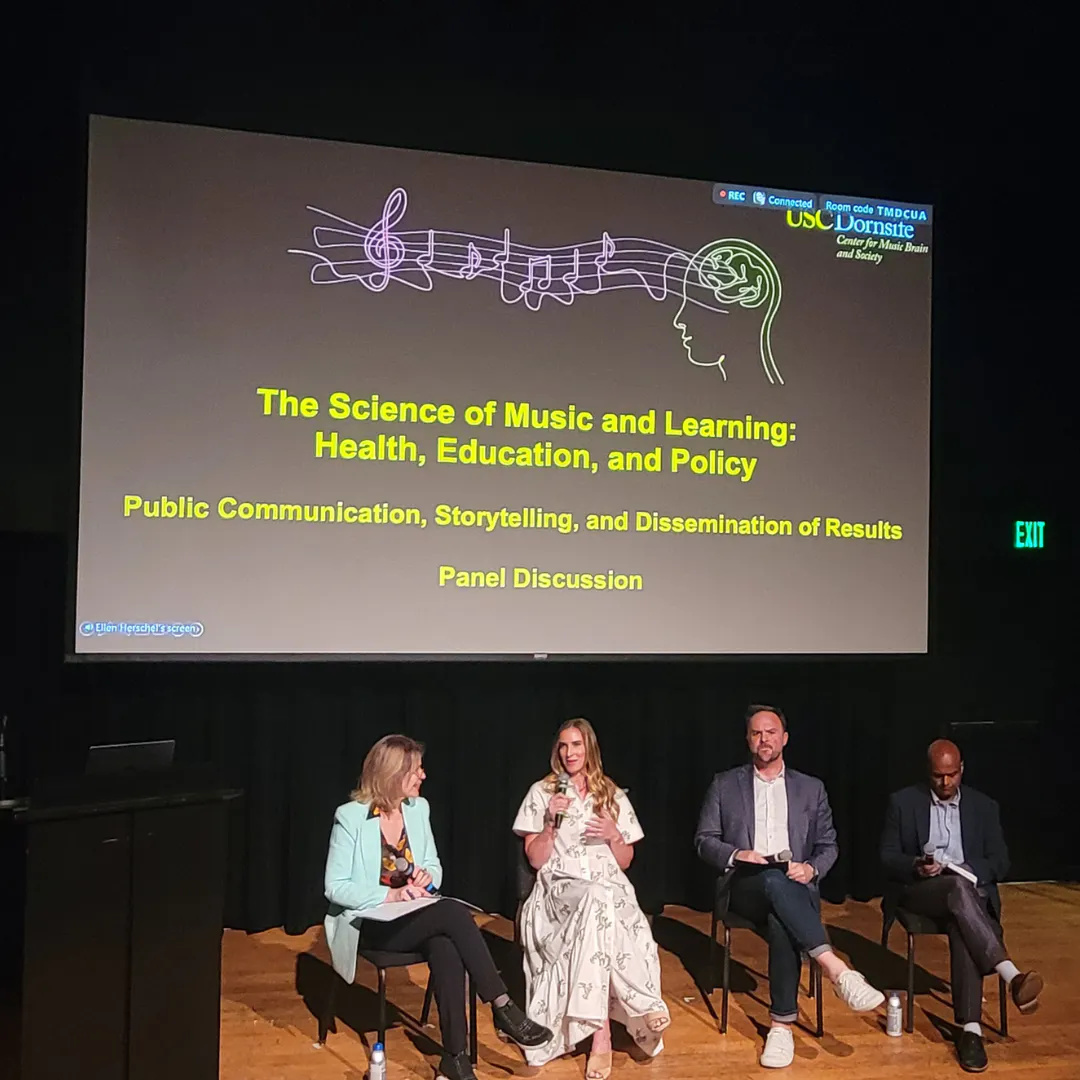
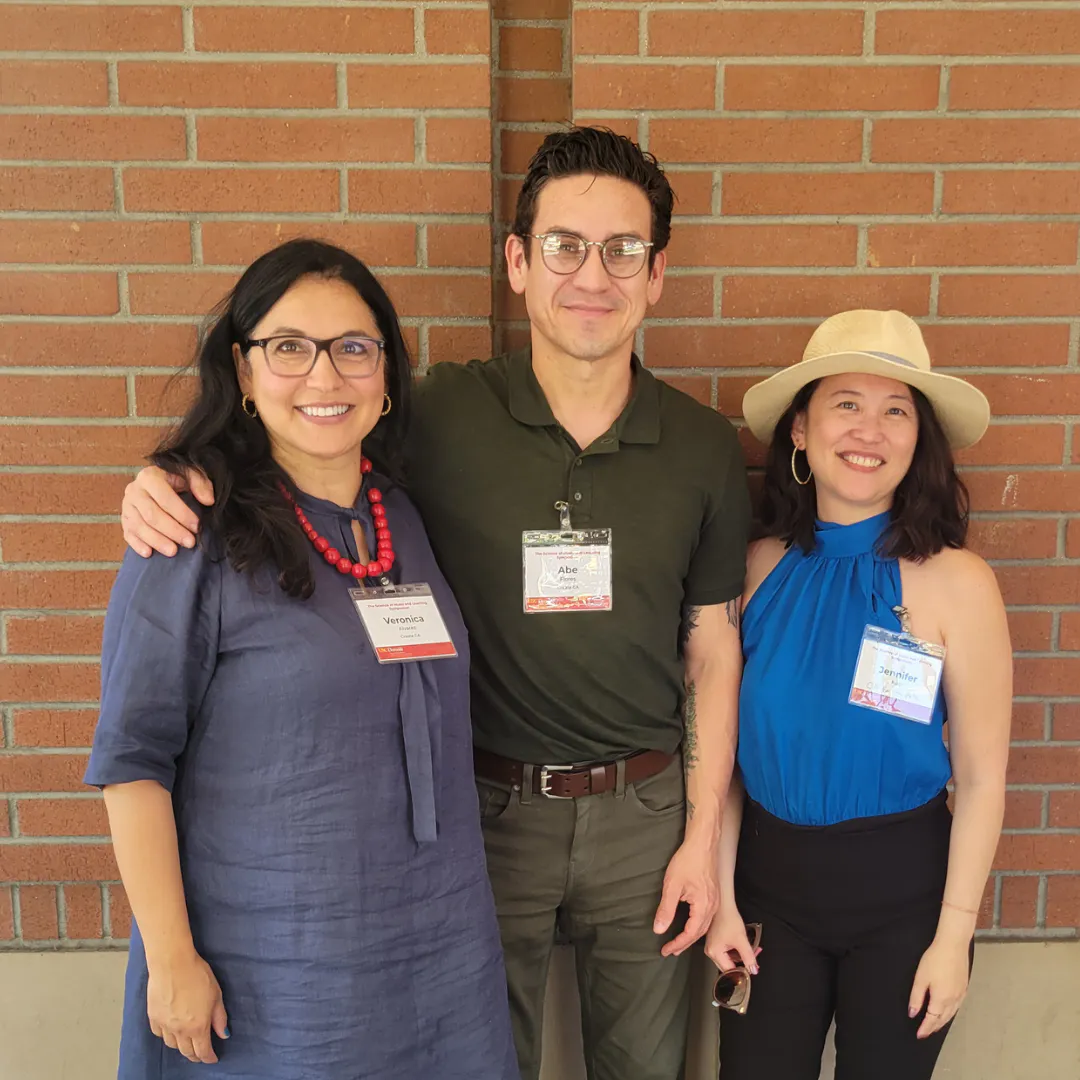
Left Photo (left to right): Renée Fleming, Cayley Tull, Andrew MacPherson, Tooshar Swain. Photo Credit: Jennifer Kuo; Right Photo (left to right): Dr. Veronica Alvarez, Executive Director at Create CA, Abe Flores, Deputy Director at Create CA, Jennifer Kuo, Special Initiatives Consultant at CA for the Arts. Photo Credit: Jennifer Kuo
L.A. County Arts and Health Week Summit (Los Angeles, CA)
Friday, June 12, 2026
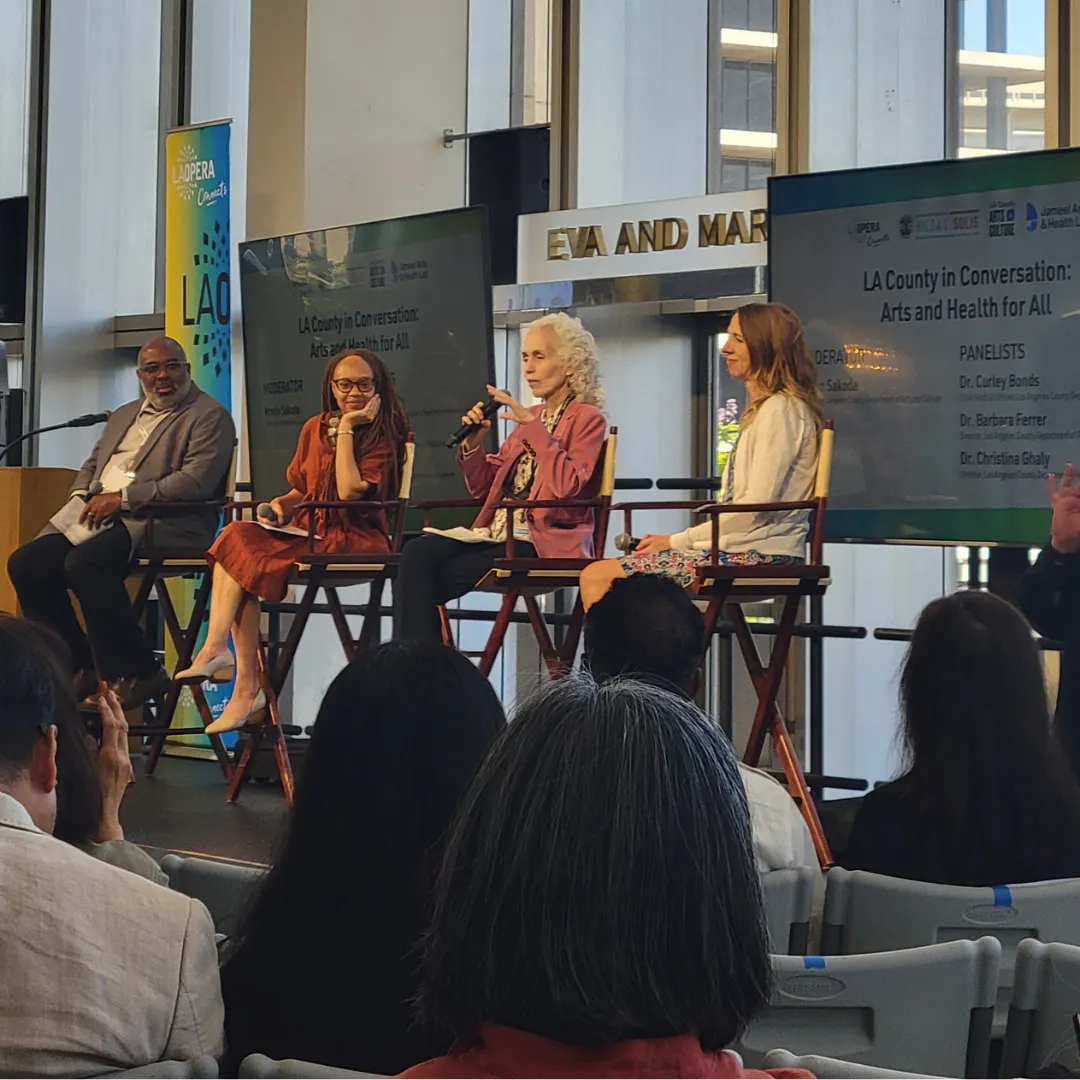
For the fourth year in a row, I attended the annual Los Angeles County Arts & Health Week Summit hosted by LA Opera Connects at the Dorothy Chandler Pavilion. Collaborators for this event included: LA County Board of Supervisors Chair Hilda L. Solis, First District; Los Angeles County Department of Arts and Culture; and the Jameel Arts & Health Lab. The program included performances, panels, experiential sessions, and a community resource fair that featured local organizations and agencies. Amongst the attendees from all different sectors, I spotted a few of our CA for the Arts board members: Daniel Tarica, Nurit Siegel Smith, Lyz Luke, Rafael González, and our Executive Liaison, L.T. Martinez.
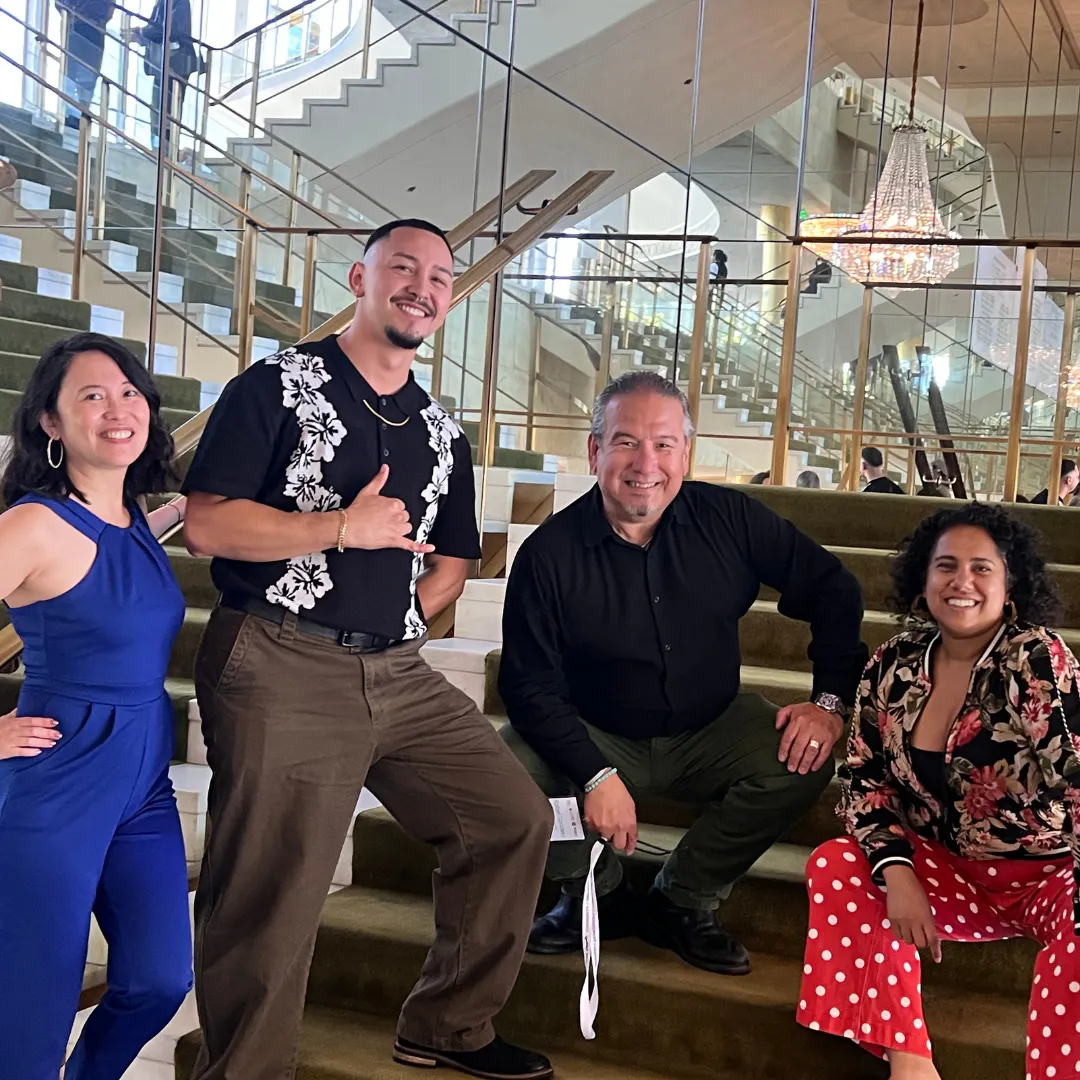
In Photo (left to right): Representing CA for the Arts - Jennifer Kuo, L.T. Martinez, Rafael González, Lyz Luke. Photo Credit: L.T. Martinez
With my background in public health, one of my highlights was the panel of Los Angeles County leaders who shared their insights of advancing a countywide vision of greater arts and health for all. Moderated by Kristin Sakoda, Director at Los Angeles County Department of Arts and Culture, the panelists included:
- Dr. Curley Bonds, Chief Medical Officer at the Los Angeles County Department of Mental Health
- Dr. Barbara Ferrer, Director at the Los Angeles County Department of Public Health
- Dr. Christina Ghaly, Director at Los Angeles County Department of Health Services
Dr. Ferrer spoke about the “shared humanity” - how we can’t embrace health without strong communities and the arts can be the most influential tool in building communities. Dr. Bonds mentioned the importance of creative expression and about the possibility of utilizing community health workers. Dr. Ghaly emphasized the focus should be on the early design of the workforce pipeline to scale individual outreach to patients. She added that the arts help people tap into joy even if we can’t change their circumstances. Kristin summarized how in order to move this intersection forward, we need to focus on awareness, investment, and collaboration.
Learn more about the Arts and Health Week Summit here.
Left Photo: Participants at the 2026 Arts Datathon. Photo Credit: Malik Daniels; Right Photo: Sessions and Exhibitors at the 2026 Arts Datathon. Photo Credit: Jennifer Kuo
Join the National League of Cities in celebrating Arts & Health Day on July 25, 2026!
The National League of Cities (NLC) celebrates the third annual National Arts & Health Day on July 25, 2026. This annual event highlights how arts and cultural programming contribute to community wellbeing, reduce social isolation, and improve public health.